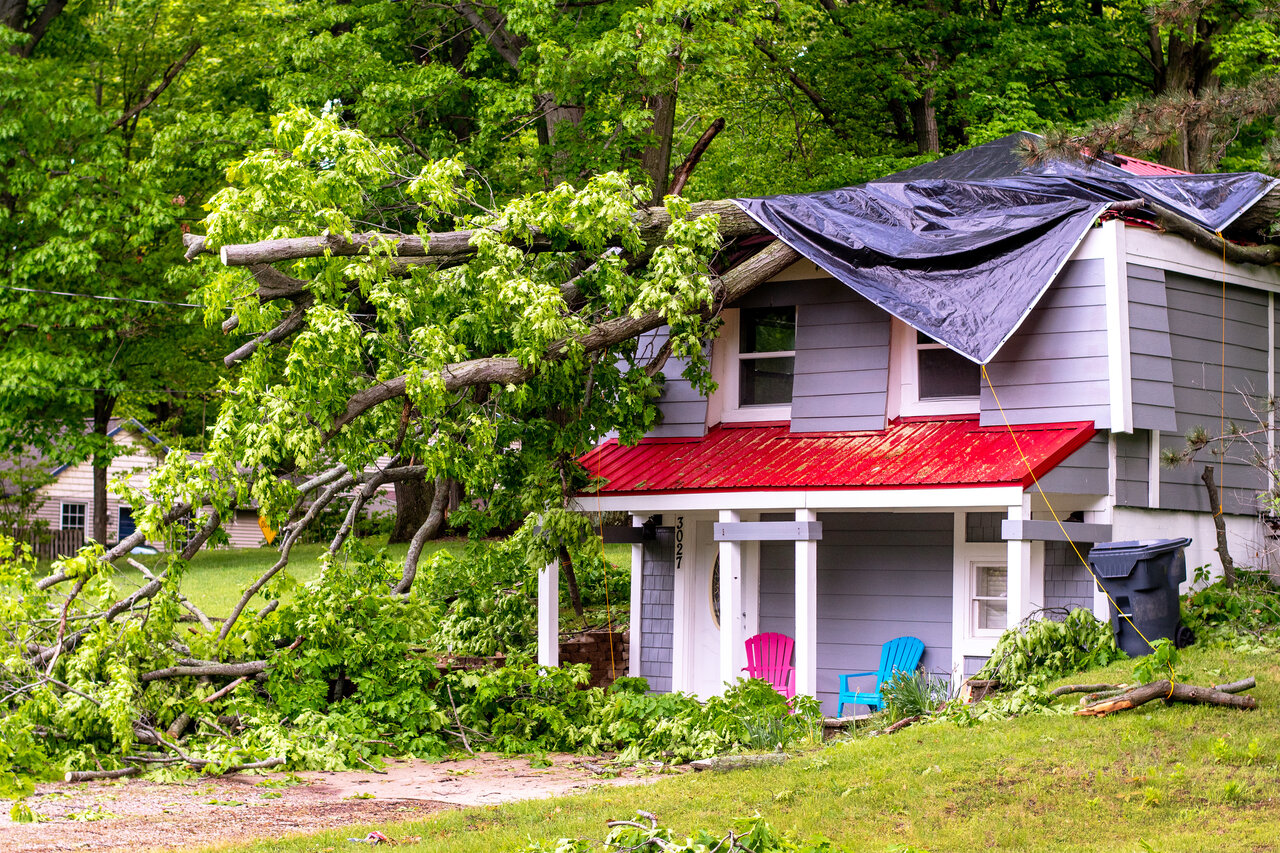
Spring in Western New York brings beautiful blooms, but it also delivers heavy rain, high winds, and unpredictable weather. For local homeowners in Niagara and Erie Counties, these seasonal shifts can easily turn a weak or damaged tree into a serious property hazard.
When the ground becomes saturated from melting snow and spring downpours, a tree’s root system loses its grip. Add a few strong wind gusts to the mix, and a seemingly healthy tree can come crashing down on a roof, vehicle, or power line. This creates a massive safety risk for your family and neighbors.
Protecting your home starts with knowing what to look for. This guide will help you identify common warning signs before a tree or large limb falls, giving you the knowledge you need to keep your property safe during storm season.
Why Spring Weather Creates More Tree Risks
After a long winter, trees are exceptionally vulnerable. Soft, waterlogged soil can significantly weaken a tree’s root system. The muddy ground simply cannot anchor the heavy weight of a mature tree, making it susceptible to uprooting.
Strong winds put added stress on trees that are already damaged or leaning, pushing them past their breaking point. Heavy spring rain can expose existing structural weaknesses, causing large branches to snap without warning. Often, the hidden damage caused by winter ice and snow only becomes obvious when these spring storms finally hit.
Common Signs a Tree May Be Hazardous
You do not need to be an arborist to spot potential danger. Look out for these common warning signs around your property.
Dead or Hanging Branches
Deadwood is a major liability during high winds. Look for large limbs that have no buds or leaves when the rest of the tree is blooming. You should also watch for broken branches caught high up in the canopy. Limbs hanging directly over roofs, driveways, sidewalks, or play areas pose the most immediate threat and require quick attention.
Cracks in the Trunk or Major Limbs
Structural integrity is vital for a tree’s survival. Inspect your trees for visible splits in the main trunk. Deep cracks where large branches connect to the trunk are especially dangerous. If you notice a sudden separation in the wood after a recent windstorm, the tree is failing and needs a professional evaluation immediately.
Leaning Trees
Some trees naturally grow at a slight angle to reach sunlight. A tree that recently started leaning is a completely different story. A sudden shift indicates root failure. Leaning combined with exposed roots or cracked, lifted soil around the base means the tree is in imminent danger of falling.
Root Problems
A tree is only as strong as its root system. Keep an eye out for soil heaving or lifting around the base of the trunk. Exposed roots or signs that the root system is actively shifting in the dirt point to severe instability. Additionally, mushrooms or fungal decay growing near the trunk flare often indicate that the roots are rotting underground.
Hollow, Decayed, or Weak Sections
Decay slowly eats away at a tree’s strength. Look for deep cavities in the trunk or areas with large patches of missing bark. Soft, rotting wood easily crumbles to the touch. Fungal growth on the outside of the bark is a strong warning sign that the inside of the tree is dead or dying.
Hazard Areas Homeowners Should Pay Extra Attention To
Certain trees present higher risks simply because of their location. You need to pay extra attention to trees planted near homes or garages. Branches extending over driveways and parked vehicles can cause massive property damage if they snap.
Trees growing close to utility lines are a major safety hazard and fire risk. Also, evaluate any limbs hanging over patios, decks, sheds, fences, and areas where kids or pets regularly play. Keeping these zones clear is essential for your family’s safety.
Hidden Damage Left Behind From Winter
Winter weather is incredibly harsh on local trees. Ice and heavy snow accumulation cause extreme stress, severely weakening branches. Freeze-thaw cycles create deep cracks in the wood as water seeps in, freezes, expands, and melts.
Salt exposure from treated roads, freezing winds, and heavy snow loads leave trees vulnerable. A tree might look completely fine at first glance during the winter months. Spring is often when this hidden winter damage finally becomes visible, revealing dead branches and cracked trunks just as storm season begins.
What To Do If You Notice a Tree Hazard
If you spot a dangerous tree on your property, safety must be your top priority. Do not try to remove large, heavy limbs yourself. Tree work is dangerous and requires specialized equipment and training.
Keep all people, pets, and vehicles completely away from the hazard area. Never go near branches touching or hovering close to power lines. Call a professional tree service for an immediate inspection. Early action can prevent catastrophic damage to your home and save you from incredibly expensive emergency repair work. Timber Tree Service is fully licensed and insured, providing 24/7 emergency response to keep you safe.
When Tree Trimming Is Enough vs. When Removal May Be Needed
Not every damaged tree needs to be cut down completely. Minor deadwood, small broken branches, or overextended limbs may just need professional trimming to restore safety and tree health.
Severe leaning, deep trunk cracks, extensive decay, or complete root failure usually point to full tree removal. A professional evaluation is the only way to know for sure. Our expert team uses large cranes and state-of-the-art equipment to handle even the most challenging removals with absolute precision.
Why Preventive Tree Care Matters Before Storm Season
Taking care of your trees before the weather turns bad is a smart investment. Preventive care drastically reduces the risk of property damage during high winds and heavy rain. It helps protect the people, pets, and vehicles on your property.
Proper maintenance also improves the overall health and structure of your trees, helping them live longer. Most importantly, securing your property gives you total peace of mind heading into the unpredictable spring and summer storm seasons.
Keep Your Property Safe This Spring
Spring storms can turn small tree issues into highly dangerous situations fast. Inspect your property now instead of waiting until a heavy branch crashes through your roof or blocks your driveway.
If you have noticed leaning trees, hanging limbs, or signs of storm damage, Timber Tree Service is here to help. We are a local, family-owned business dedicated to giving you great service at reasonable prices. We offer professional tree inspections, expert trimming, and safe removal services across Niagara and Erie County, NY.
Call us today for a free same-day estimate. We are available 24/7 for emergencies and proudly offer a 10% senior discount, plus $100 off for all new customers!
Frequently Asked Questions About Tree Hazards
How do I know if a tree is dangerous?
Look for dead branches, deep cracks in the trunk, visible decay, fungal growth, or a sudden, noticeable lean. If you see lifted soil around the base, the tree may be at immediate risk of falling.
Should I worry about a leaning tree after heavy rain?
Yes. If a tree suddenly starts leaning after heavy rain, the waterlogged soil has likely caused the root system to fail. This requires an urgent professional inspection.
Can a damaged branch fall without warning?
Absolutely. A cracked or decayed branch can hang onto a tree for months and suddenly drop on a clear, calm day due to its own weight.
When should I call a tree service after a storm?
Call Timber Services LLC if a tree has fallen on a structure, is blocking a driveway, is leaning dangerously, or has large, broken branches hanging overhead.
Is spring a good time to trim trees in WNY?
Spring is a great time to evaluate storm damage and remove dead or dangerous limbs. Preventive trimming helps secure your property before the most severe storms arrive.
Schedule Your Tree Removal While You Can
If you have a dying, leaning, or troublesome tree on your property, don’t wait for disaster to happen to turn it into a costly emergency. Call Timber Services LLC today for a free same-day estimate and let our experienced WNY team help protect your home, vehicles, and family. With 24/7 emergency service, 10% off for seniors, and $100 off for first-time customers, now is the time to take action.
Pick up the phone and call Timber Services LLC now at 716-417-0253 to receive a free estimate or 24/7 emergency service.
emergency tree removal tree care tree removal tree removal cost
Last modified: April 16, 2026


