In Western New York, trees are part of what makes our neighborhoods beautiful—until one turns into a liability. The True Cost of Tree Removal: Paying a Pro vs. Paying the Price After a Fall
In Western New York, trees add beauty to neighborhoods but can quickly cause problems. Heavy snow, strong winds, wet soil, and aging street trees make it easy for weak trees or large branches to fall unexpectedly.
The core decision for homeowners is whether to pay a clear, upfront cost for professional removal or risk much bigger, unpredictable bills—and stress—if a tree falls unexpectedly. Paying now almost always avoids the growing risks and uncontrolled expenses that result when a tree falls on its own.
The predictable cost: professional tree removal
Professional tree removal is costly, but the price is predictable because a qualified company can assess the job beforehand.
Industry guides show tree removal prices vary by size, access, and job complexity. Most cost $200 to $2,000, averaging $750, while large, hazardous, or hard-to-reach trees cost more. Home Advisor
What drives the quote?
- Tree size and height (bigger tree = more labor + rigging)
- Location and access (tight backyards, fences, pools, landscaping)
- Hazard level (dead/dying trees can be more unpredictable to dismantle safely)
- Proximity to targets (house, garage, cars, sidewalks, power lines)
- What’s included (haul-away, brush chipping, stump grinding, cleanup)
Cleanup after a removal can be substantial. Debris hauling averages in the high hundreds, depending on volume and difficulty. Home Advisor
By hiring a professional, you pay for their training, equipment, safety procedures, and risk management plan.
The unpredictable cost: when the tree falls first
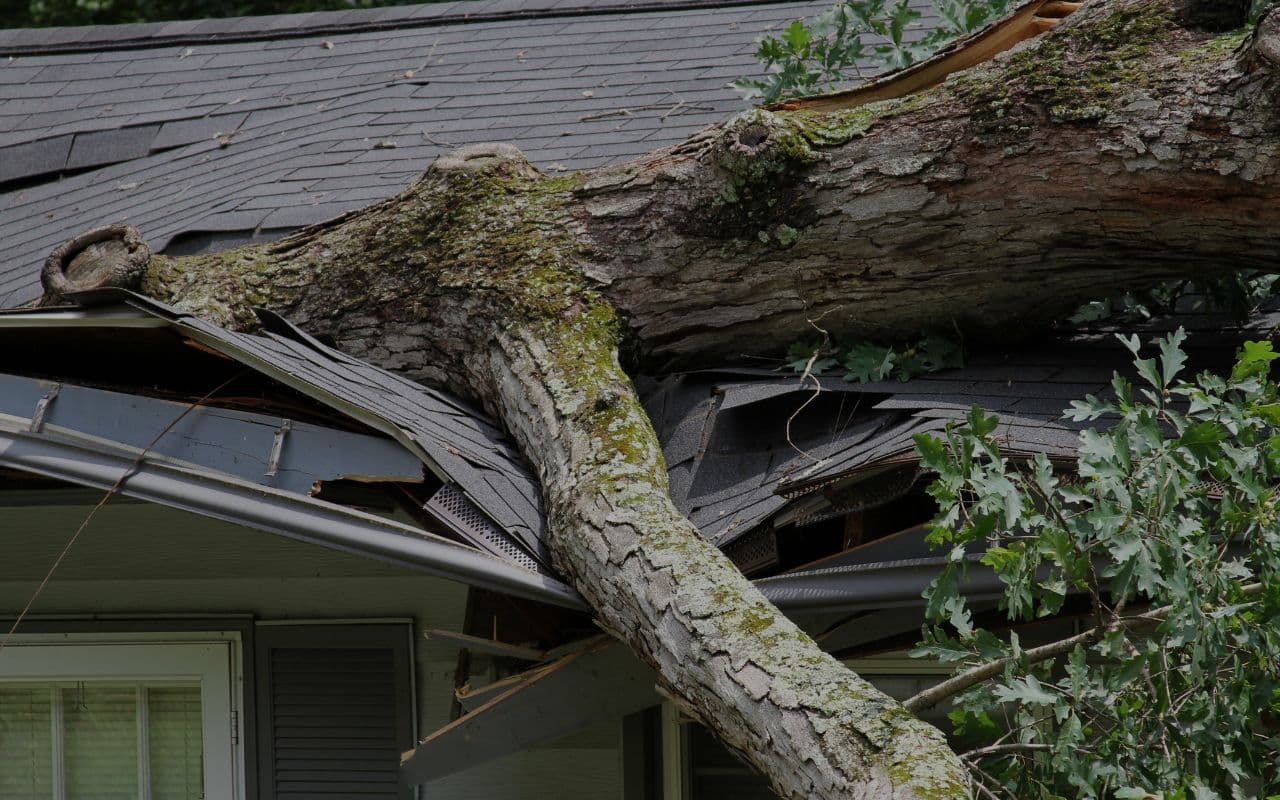
When a tree falls unexpectedly, costs depend on what it hits and what follows, not the tree itself.
1) Home and property damage (and your deductible)
If a tree hits an insured structure, homeowners’ insurance may cover repairs and may help with removal—often with limits that vary by policy. The Insurance Information Institute notes that when a tree hits an insured structure, policies generally cover removal, but removal coverage can be limited (often cited at around $500–$1,000, depending on the insurer and policy). III
If the tree falls without hitting a covered structure, coverage for removal may be limited or excluded, depending on the situation and policy terms. III
Insurers also commonly explain that coverage and responsibility can hinge on factors such as whether the damage is storm-related or negligence-related, and on the property from which the tree originated. Allstate
So even in a “covered” event, homeowners often face:
- A deductible
- Coverage limits for removal/debris
- Possible out-of-pocket costs to fully restore the property, especially for items like fences, landscaping, and sheds that might have limited or no insurance coverage, depending on your policy.
2) Safety risk: people don’t bounce
A falling tree is not just a property risk—it’s also a safety risk. After storms, many try dangerous DIY removal.
The CDC estimates that about 36,000 people per year are treated in emergency departments for chainsaw-related injuries. cdc.gov
Tree work is high-risk due to unstable wood, limbs under tension, equipment kickback, and sudden failures.
3) Utility hazards and neighborhood disruption
Downed trees do more than damage homes. They can knock down power lines, block driveways, and pose a danger. FEMA warns that downed trees and power lines pose a serious threat to life and property. FEMA
Once a tree is down, you could face blocked access, safety hazards, and uncontrolled delays.
Why WNY trees fail when you least want them to
Buffalo and Western New York homeowners see patterns that increase failure risk:
- Wind events that test weak unions and decayed trunks
- Heavy snow/ice loads that overload branches
- Saturated soils that reduce root stability
- Aging or stressed trees in tight urban/suburban planting strips
Biology matters, too. The Emerald Ash Borer has plagued New York. The NYSDEC says that once ash trees are infested, most die within 2 to 4 years, increasing the likelihood of failure and the creation of deadwood. Department of Environmental Conservation
How professionals evaluate risk (and why it matters)
Assessing risk means asking how likely a tree is to fail and what it may hit.
That “targets + defects” approach is at the heart of standardized tree risk assessment frameworks used by trained arborists and assessors. ISA’s Tree Risk Assessment resources (including the TRAQ program and manual) focus on structured evaluation of defects, site conditions, targets, and mitigation options. Isa Arbor
Even public resources for hazard evaluation reflect the same logic: assess the defect and the target, then prioritize mitigation accordingly. US Forest Service
Warning signs that a tree is becoming a liability
If you notice any of these signs, consult a pro before the next wind or snow event:
- Dead branches (especially large “hanger” limbs)
- Cracks in the trunk or major limbs
- Mushrooms/fungal conks (often a sign of internal decay)
- A sudden lean or fresh soil lifting near the root plate
- Weak branch unions (tight “V” crotches, including bark)
- Large cavities/decay pockets
- Dead or declining ash trees (especially in EAB-impacted areas) Department of Environmental Conservation
Resources aimed at homeowners commonly emphasize that defects matter most when the tree (or its parts) are within striking distance of a “target,” such as a home, driveway, or gathering space. Arbor Day Foundation
A simple way to compare the two costs
Think of it like this:
Professional removal costs are predictable, planned expenses—letting you control cost, timing, and risk.
Failure cost = a stack of unplanned expenses and risks:
- Deductible + potential coverage limits III
- Repairs (timeline stress, contractor scheduling, potential displacement)
- Emergency cleanup and access issues
- Safety risk (especially if DIY cutting happens) cdc.gov
- Utility hazards (downed lines and storm aftermath risks) FEMA
Insurance may help, but you still face disruption, uncertainty, and personal costs far beyond money.
How Timber Tree Service, LLC can help (Buffalo & All of Western New York)
Don’t wait until it’s too late—schedule a professional evaluation and quote with Timber Tree Service, LLC today. Let us help you protect your home and peace of mind before disaster strikes.
Timber Tree Service, LLC handles tree removal across Western New York and Buffalo, helping homeowners act before emergencies.
If you’re unsure whether your tree will survive the winter, it’s time to act. Proactively removing a risky tree puts you in control, saving you stress, money, and unwanted surprises. Don’t wait until disaster strikes—plan removal before gravity forces an emergency.
emergency tree removal tree care tree removal tree removal cost
Last modified: March 8, 2026


