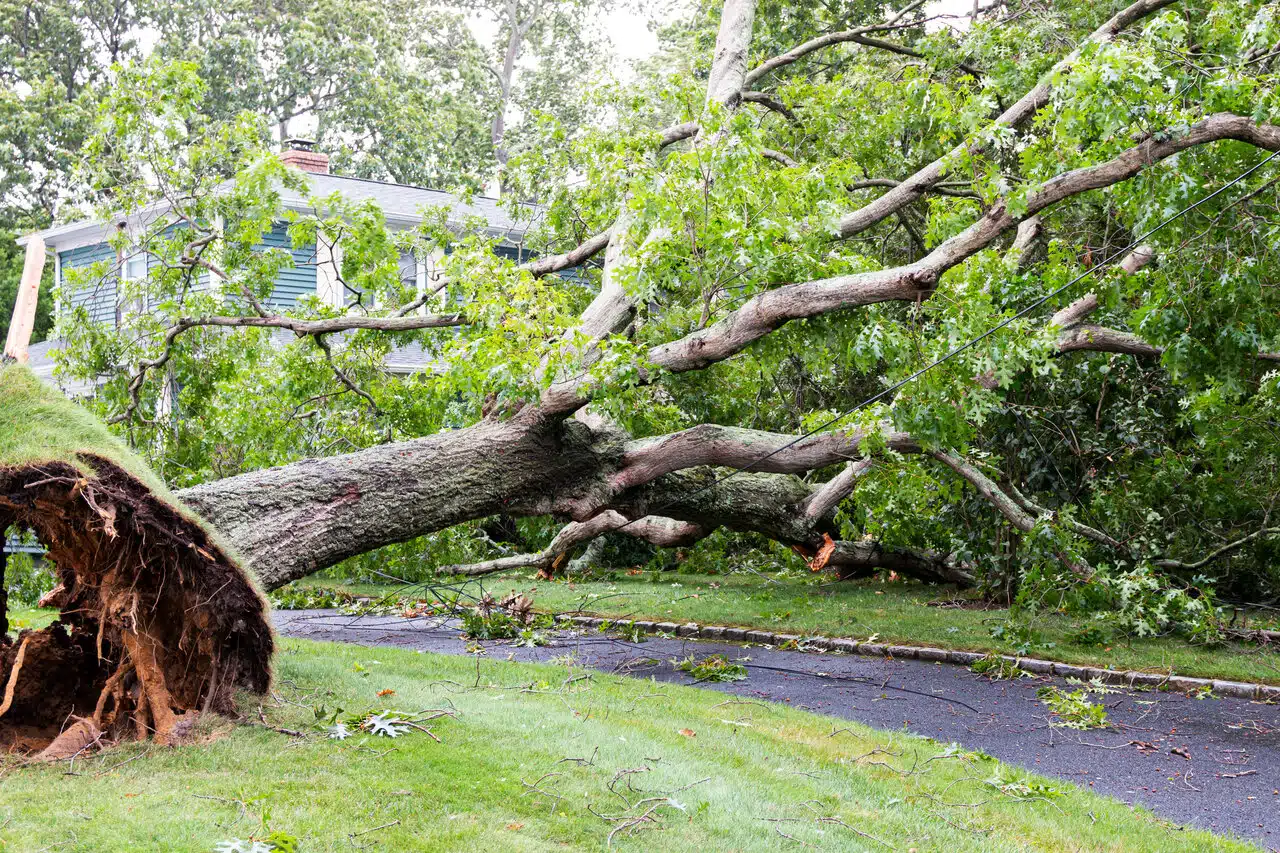
A tree that looked stable enough in February can quietly become a serious hazard by mid-March. The ground softens, snowmelt saturates the soil, and root systems that were locked in frozen earth suddenly lose their grip. For homeowners across Western New York, early spring isn’t just the start of warmer weather—it’s one of the most dangerous seasons for trees on your property.
March and April bring a specific combination of conditions that can push already weakened or dying trees toward failure. Thawing soil, rising groundwater, lingering freeze-thaw stress, and the first strong spring storms create the perfect setup for uprooting, limb failure, and property damage. Waiting to see what happens is rarely the right call.
This guide breaks down exactly why early spring puts WNY trees at risk, what warning signs to watch for, and why acting now—before the next wind event—is the smartest move you can make for your home and family.
What Makes March and April So Dangerous for Trees in WNY
Snowmelt Saturates the Soil
When winter snow starts to melt across Niagara County and Erie County, the ground absorbs an enormous amount of water in a short period. Soil that was frozen solid just weeks earlier becomes soft, muddy, and far less capable of anchoring a tree’s root system.
This is especially concerning for trees that were already stressed, leaning, or shallow-rooted going into winter. A root system that held firm in frozen ground may not hold when the soil turns to mud. You don’t need a severe storm to cause a failure—a steady wind on a saturated day can be enough.
Rising Groundwater Weakens Root Zones
As snowmelt adds to groundwater levels, root zones can become oversaturated for extended periods. This weakens the structural grip that roots have on the surrounding soil and accelerates decay in trees that were already compromised.
When spring winds and rainstorms arrive on top of these conditions, even a tree that has stood for decades can become unstable. The ground itself becomes part of the problem.
Mud Reveals—and Worsens—Existing Issues
Soft, muddy ground does more than create instability. It also makes existing tree problems more visible and more urgent. Trees near slopes, driveways, foundations, sheds, garages, and power lines become even more concerning when the ground around them can’t support their weight.
Mud and soft soil also complicate any attempt to deal with a problem tree on your own. A risky situation becomes genuinely dangerous when the ground beneath your feet isn’t stable.
Winter Damage Becomes Visible in Early Spring
Late winter damage often hides until conditions change. Once temperatures start rising, homeowners begin to notice what the cold season left behind: split limbs, new trunk cracks, hanging branches, hollow sections, and visible rot near the base.
Dying trees may no longer be able to support their own weight or the weight of large limbs. A tree that survived December through February in frozen conditions may be far less structurally sound once that freeze support is gone. Early spring is the season when hidden problems surface—and when fast action makes the biggest difference.
Signs a Tree Should Be Evaluated Right Away
Visual Warning Signs
Keep a close eye on any trees on your property for the following:
- Leaning that appears worse than it did before winter
- Cracks or splits in the trunk
- Large dead or hanging branches
- Mushroom growth or visible rot near the base
- Bare sections that don’t appear healthy
- Branches extending over your home, driveway, garage, or sidewalk
- Raised or disturbed soil around the base, which can indicate root movement
Situational Warning Signs
Some warning signs have more to do with context than visible damage:
- The tree sustained damage during a winter storm
- It’s located close to your house, vehicles, or utility lines
- Large limbs have dropped from the tree before
- Your yard or property stays particularly wet every spring
- You’ve been delaying action because the tree “hasn’t fallen yet”
That last point deserves special attention. Many homeowners wait until something actually goes wrong. By then, the damage—to property, vehicles, or the home itself—may already be done. Preventive tree service is nearly always safer, less stressful, and more affordable than emergency recovery.
The Damage a Failing Tree Can Cause
A tree falling at the wrong angle, or at the wrong time, can result in serious consequences:
- Roof and structural damage
- Broken gutters and siding
- Crushed fences and outbuildings
- Damaged sheds and garages
- Blocked driveways
- Vehicle damage
- Power line interference
- Dangerous conditions for family members, neighbors, and pets
When a weakened tree is standing in saturated spring ground, disaster can be moments away. The cost of emergency cleanup and property repairs far exceeds the cost of a scheduled removal—and that’s before factoring in insurance headaches and the stress of dealing with sudden damage.
Why It Pays to Schedule Tree Service Before It Becomes an Emergency
Prevention Beats Panic
Identifying risk before the next heavy rain or wind event gives you options. Scheduling a professional inspection or removal in March or April puts you in control of the situation. Waiting until something fails means dealing with it under pressure, often at a higher cost, and sometimes in dangerous conditions.
Peace of Mind Through Spring and Summer
Getting a professional evaluation removes the guesswork. Once a risky tree has been assessed—and removed if necessary—you can move through the rest of spring knowing your property is safer. That peace of mind has real value, especially for families with children, pets, or vehicles parked near large trees.
The Real Cost of Waiting
Compare a planned service call to the potential cost of property damage, emergency response, cleanup, and insurance claims. The math is straightforward. Acting early is almost always the more cost-effective choice.
How Timber Tree Services Helps WNY Homeowners
Local Experience You Can Count On
Timber Tree Services has been serving Niagara County and Erie County since 2005. As a local, family-owned company, we understand the specific challenges that WNY spring conditions create for homeowners. Saturated soil, freeze-thaw stress, and early spring storms are part of life here—and we know how to handle the tree problems that come with them.
24/7 Emergency Service When You Need It Most
When a tree becomes dangerous, you need help fast. Timber Tree Services offers 24/7 same-day emergency service and same-day storm cleanup, so you’re never left waiting when the situation is urgent. Whether it’s a storm in the middle of the night or a tree that shifted unexpectedly, our team is ready to respond.
Safety-Focused, Fully Equipped
Tree removal—especially on soft, spring ground—is not a DIY job. Our team is fully licensed and insured, and we use large cranes and specialized equipment to handle even the most difficult removals safely and precisely. Every job is approached with your safety and property protection as the top priority.
Savings That Make It Easier to Act Now
We offer a 10% senior discount and $100 off for first-time customers, because we know that price is often the reason people hesitate. These offers are our way of making it easier for WNY homeowners to act before a problem tree becomes an emergency.
Don’t Wait Until Late Spring or Summer
By the time late spring arrives, the window for easy action may already have closed. Heavier leaf growth adds significant weight to already compromised branches. Spring storms can roll through before a homeowner gets around to making a call. A tree that survives one windy stretch is not necessarily safe for the next one.
The best time to address a failing tree is when the warning signs first appear—not after the damage is done.
Protect Your Property This Spring
If you have a dying, leaning, storm-damaged, or troublesome tree on your property, March and April are the months to act. Soft ground and spring weather won’t wait, and neither should you.
Call Timber Tree Services for a free same-day estimate and get your property checked before a dangerous tree causes costly damage. Take advantage of our 10% senior discount and $100 off for first-time customers, and rest easy knowing our team is available 24/7 if the situation turns urgent.
Your local WNY tree experts are ready—call us today.
Frequently Asked Questions
Why are trees more dangerous in March and April?
Early spring brings saturated soil, rising groundwater, and lingering freeze-thaw stress. These conditions reduce the stability of root systems, making already weakened or dying trees much more likely to uproot or lose large limbs—especially during wind events or heavy rain.
Can melting snow make a tree fall?
Yes. Snowmelt adds a large volume of water to the ground in a short period. When soil becomes oversaturated and soft, it loses its ability to firmly anchor tree roots. Trees that were structurally compromised going into winter are at the highest risk of uprooting during the spring thaw.
What are the signs a tree needs to be removed?
Key warning signs include leaning that has worsened, cracks in the trunk, large dead or hanging branches, visible rot or mushroom growth near the base, and disturbed soil around the roots. If a tree overhangs your home, driveway, or power lines, it should be evaluated by a professional as soon as possible.
Is a leaning tree always dangerous?
Not always, but a tree that has started leaning more noticeably—especially after winter or during the spring thaw—warrants a professional assessment. Leaning combined with soft ground, root disturbance, or visible decay significantly increases the risk of failure.
Should I remove a dead tree before spring storms?
Yes. Dead trees are structurally weakened and far more susceptible to uprooting or limb failure during storms. With soft spring ground adding to the instability, a dead tree near your home, vehicles, or power lines should be removed as soon as possible.
Does Timber Tree Services offer emergency tree removal in WNY?
Yes. Timber Tree Services provides 24/7 same-day emergency tree removal across Niagara County and Erie County. If a tree becomes an immediate hazard, call us any time and we’ll respond quickly.
Does Timber Tree Services offer discounts for seniors or first-time customers?
Yes. We offer a 10% senior discount and $100 off for first-time customers. Contact us for a free same-day estimate to get started.
Schedule Your Tree Removal While You Can
If you have a dying, leaning, or troublesome tree on your property, don’t wait for spring thaw, soft ground, or high winds to turn it into a costly emergency. Call Timber Tree Services today for a free same-day estimate and let our experienced WNY team help protect your home, vehicles, and family. With 24/7 emergency service, 10% off for seniors, and $100 off for first-time customers, now is the time to take action.
Pick up the phone and call Timber Tree Service now at 716-417-0253 to receive a free estimate or 24/7 emergency service.
emergency tree removal tree care tree removal tree removal cost
Last modified: March 8, 2026


